
The business situations in this article are fictional illustrations, not accounts of Parikh Advisory client engagements.
At ten customers, the founder personally chases a late order. At a hundred, sales assumes operations will follow up, operations assumes accounts has cleared the payment, and nobody tells the customer. Growth has changed the number of handoffs, while ownership still lives in people’s heads. The repair starts by following one promise through to completion.
Find the moment the promise changes hands
Take a recent failed order or service request and reconstruct the timeline. What did sales promise? What information did the next team receive? Did that team accept the work, or was a CRM status simply updated? Identify waiting time separately from processing time. The break often sits between two apparently completed tasks: “sent” is not the same as “accepted.”
Follow the situation
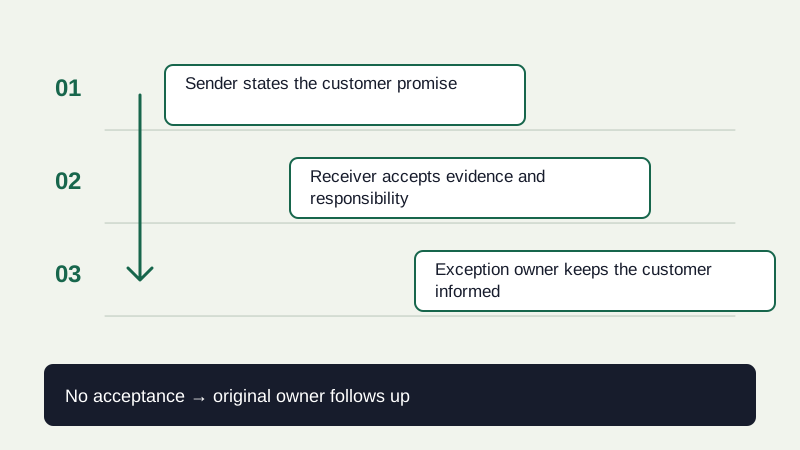
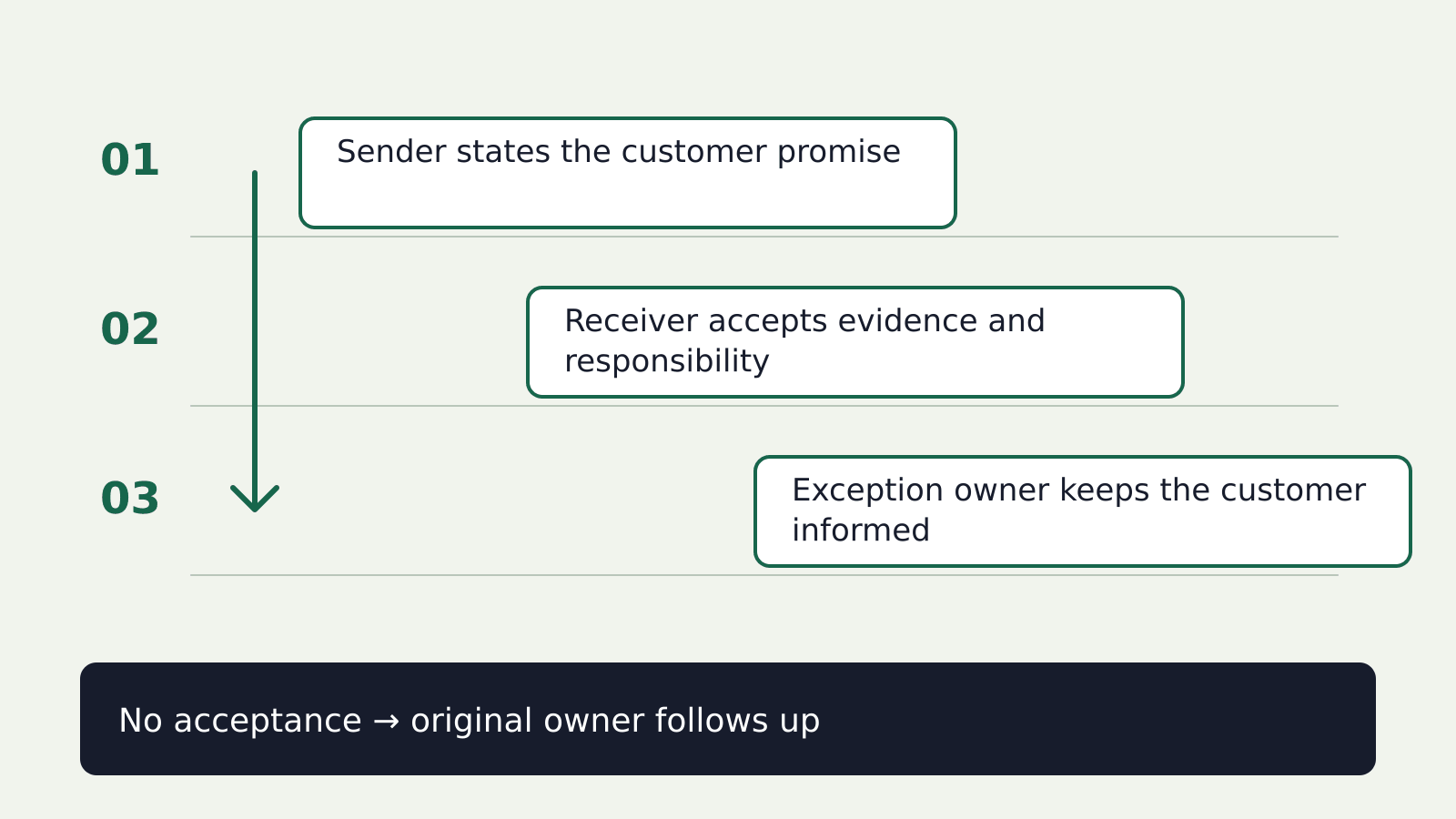
- Sender states the customer promise
- Receiver accepts evidence and responsibility
- Exception owner keeps the customer informed
- No acceptance → original owner follows up
Define acceptance and exceptions
For each transfer, specify the minimum context, receiving role, expected response, customer-visible status and escalation path. State what happens if the information is incomplete or the owner is absent. A customer should not need to repeat their story because an internal team changed. Establish one owner for the end-to-end outcome even when several teams execute portions of it.
Measure the failure that matters
Count aged items, rejected handoffs, rework, repeat contacts and promises missed. Use a small sample of actual cases before creating a dashboard. If the team improves its own completion rate by pushing unfinished work downstream, the metric is rewarding the wrong behavior. Review both customer completion and operational burden.
Compare the next moves
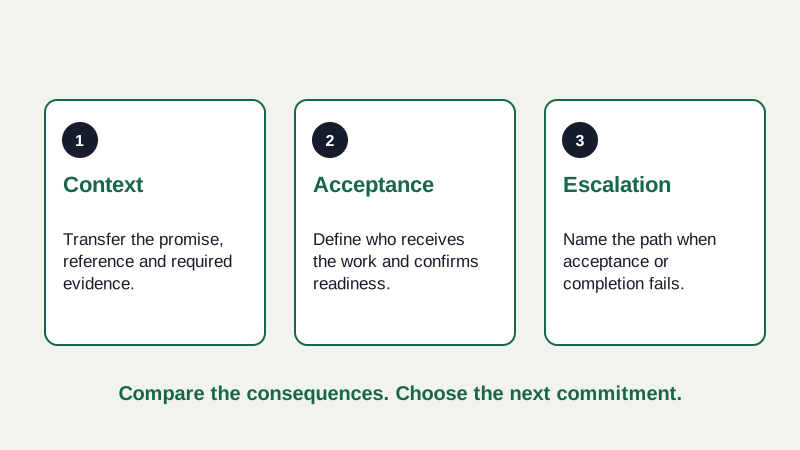
- Context: Transfer the promise, reference and required evidence.
- Acceptance: Define who receives the work and confirms readiness.
- Escalation: Name the path when acceptance or completion fails.
Change the process before automating
A workflow tool can make queues and reminders visible. It cannot decide who has authority to accept an exception or which promise takes precedence. Agree on those rules first, then configure the simplest reliable mechanism. Pilot with one journey and an explicit fallback; expand only when the new owners can operate it without the founder acting as the hidden integration layer.
The next decision
Take one delayed customer case into the next operations meeting and agree exactly when its handoff becomes accepted.
Source note: GOV.UK Service Manual, map your service end to end. The scenario and proposed allocation, where applicable, are illustrative; the linked source supports the underlying method or regulatory context.
Sources & scope
Related primary reading is provided below. The decision framework and fictional examples are Parikh Advisory’s analysis; these references do not establish that the illustrated events occurred.
- Understand users and their needsUK Government Digital Service