The business situations in this article are fictional illustrations, not accounts of Parikh Advisory client engagements.
A polished demo can make a Singapore launch feel close. The more consequential questions concern what activity the business will perform, which entity performs it, what permissions apply, and who carries the operational and customer obligation when something goes wrong. A product team should answer those questions alongside qualified Singapore legal and compliance advisers before presenting a launch date as settled.
Draw the money and data journeys
Describe each service in plain language: who contracts with the customer, receives funds, holds or transfers value, instructs a payment, maintains records and resolves complaints. Include partners and outsourced providers. A label such as “technology platform” does not establish the regulatory treatment of the underlying activities. MAS guidance maps specific payment services and licensing categories under the Payment Services Act; applicability turns on the actual business model.
Follow the situation
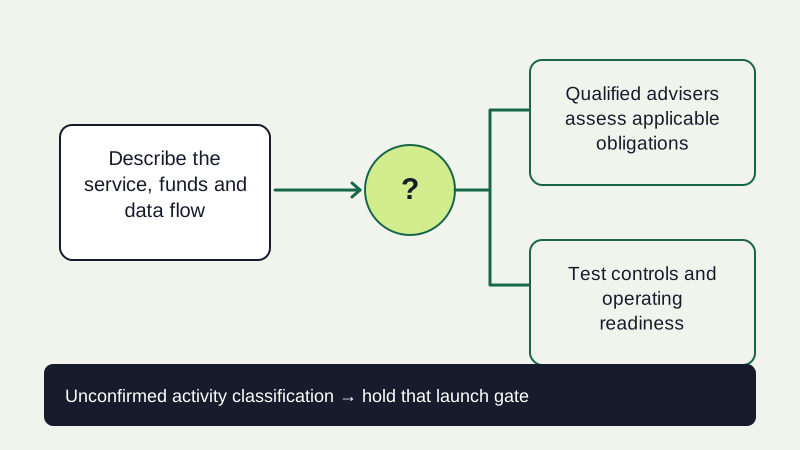
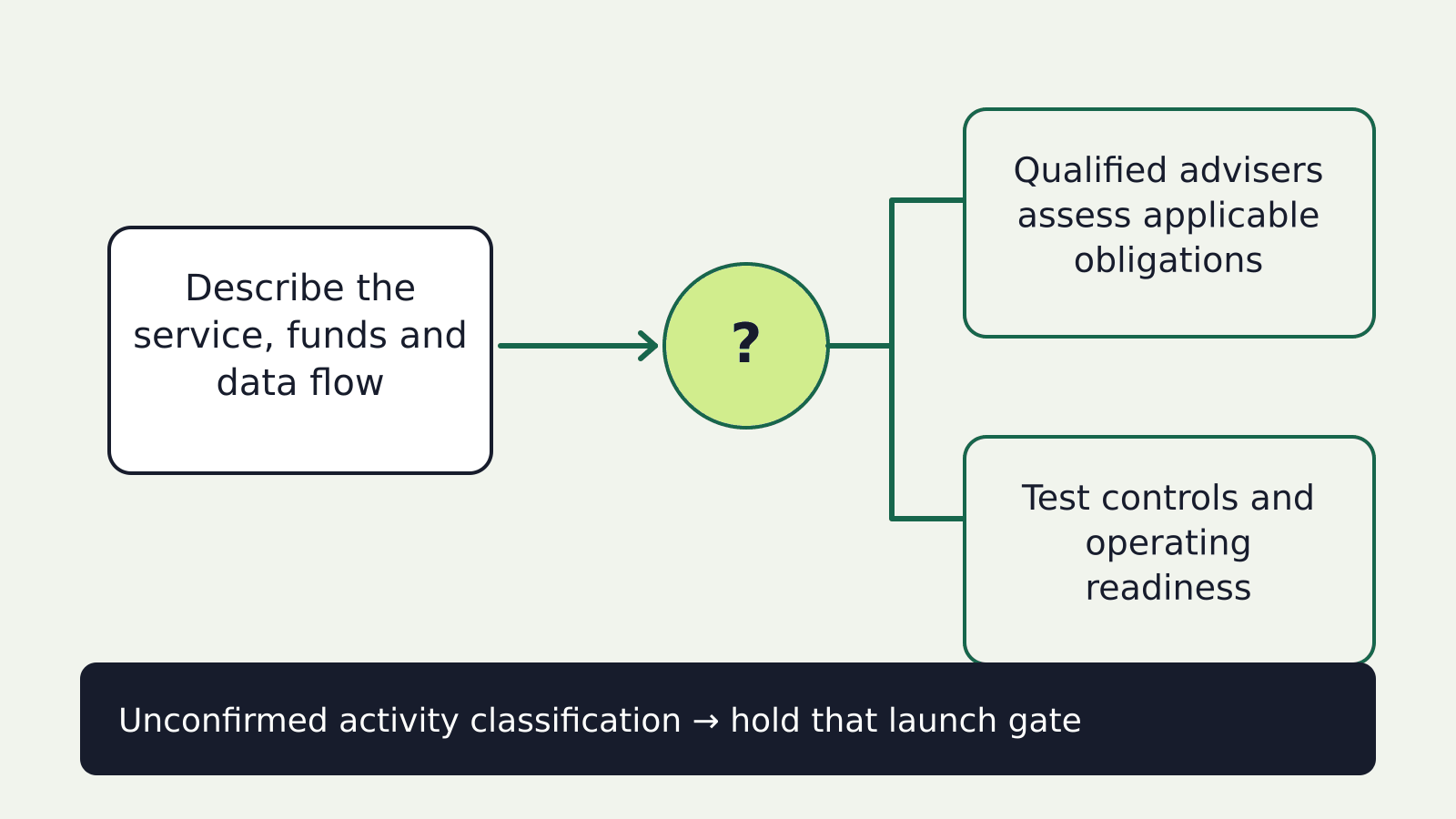
- Describe the service, funds and data flow
- Qualified advisers assess applicable obligations
- Test controls and operating readiness
- Unconfirmed activity classification → hold that launch gate
Check permission and ownership
For every activity, identify the responsible entity, proposed licence or exemption analysis, partner agreement and control owner. Have local counsel confirm the assessment and current requirements. The team should also define who conducts customer due diligence, monitors transactions, handles incidents and safeguards relevant funds when applicable. A partner’s regulated status does not automatically transfer all responsibilities away from the product company.
Turn obligations into test cases
Translate confirmed requirements into workflows: onboarding, access restrictions, failed or disputed transactions, customer notices, recordkeeping, support and escalation. Test an ordinary customer journey and a case that needs manual intervention. Ask whether a reviewer can explain a decision from the evidence retained. A compliance slide in a deck cannot substitute for a functioning exception path.
Compare the next moves
- Activity: Document what each entity actually does.
- Review: Confirm applicable permissions and obligations with specialists.
- Operate: Demonstrate controls, communications and incident ownership.

Choose an honest release boundary
A limited pilot may be possible under appropriate permissions and safeguards, but it is not a shortcut to licensing. Define which customers, activities, volumes and partners are within the proposed release, then set stop conditions. Separate technical readiness, commercial demand and legal permission. The accountable decision is a documented go/no-go with unresolved dependencies visible to the founder and investors.
The next decision
Ask the accountable team to sign off the activity map, permissions and release boundary before the launch date becomes a promise.
Source note: MAS, Licensing for Payment Service Providers. The scenario and proposed allocation, where applicable, are illustrative; the linked source supports the underlying method or regulatory context.
Sources & scope
Related primary reading is provided below. The decision framework and fictional examples are Parikh Advisory’s analysis; these references do not establish that the illustrated events occurred.
- Licensing for Payment Service ProvidersMonetary Authority of Singapore
- Regulated payment services under the Payment Services ActMonetary Authority of Singapore
Educational product and operating analysis. Applicable legal, financial, risk and compliance requirements need qualified review for the specific activity and jurisdiction. This article does not certify launch readiness or compliance.